
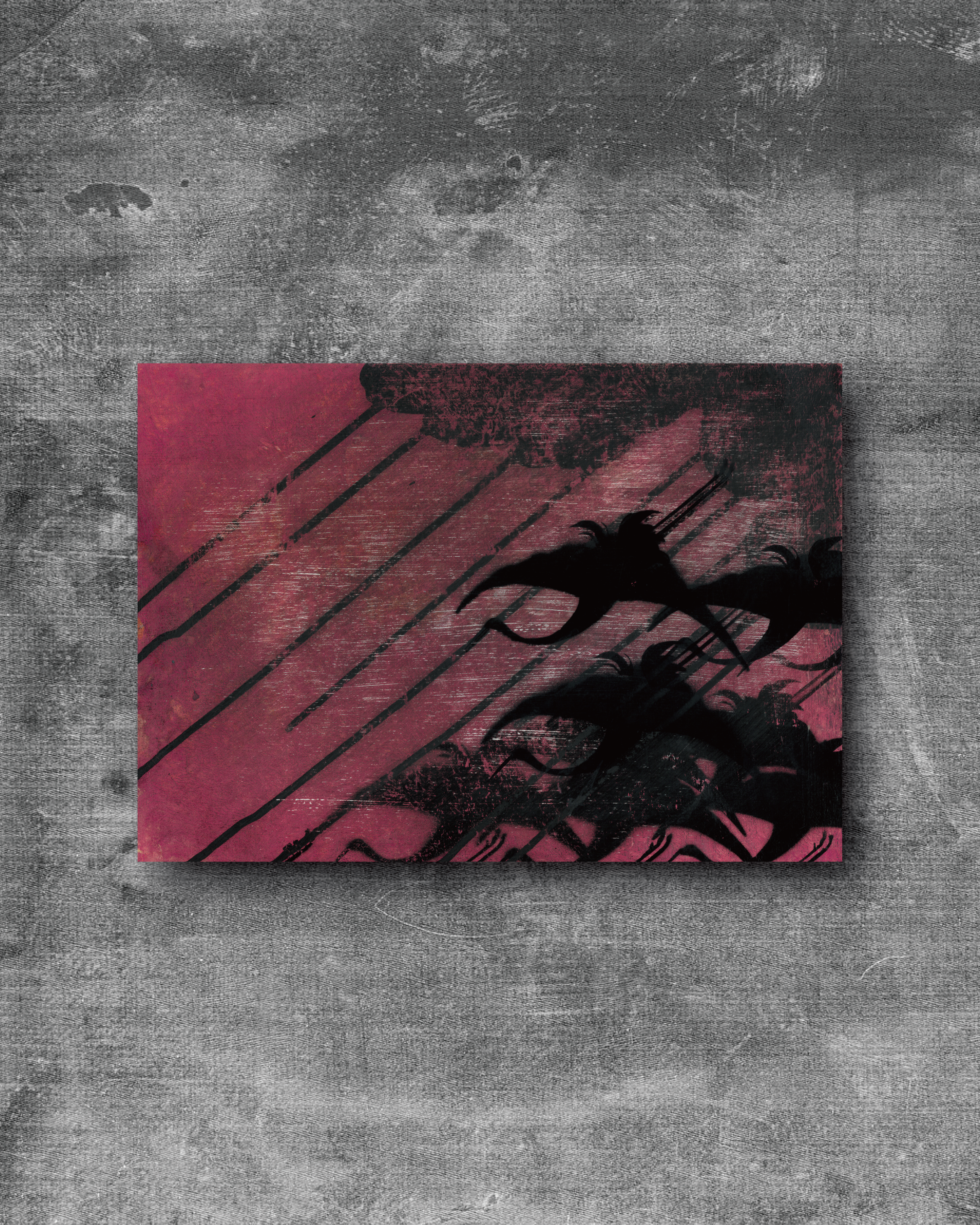

霧散
297mm × 420mm
木製キャンバスにジェッソ、クロスプレーにペン
本作は、俵屋宗達と本阿弥光悦による書画一体の共作《鶴下絵三十六歌仙和絵巻》を参照し、「書」と「画」を分離した試みのうち、「画」のみを抽出した作品である。
明治期に起こった「書ハ美術ナラス」という論争の中で、日本における造形表現は「美術」と「それ以外」へと再編され、書は美術の枠外へと置かれた。本作において、桃山期の書画一体の世界から書が欠落している状態は、そうした近代以降の書画芸術の断絶を象徴している。 夕暮れの空の下、かつて鶴として描かれた存在は闇に沈み、カラスのような影へと変貌する。それは日本美術が迎えた長い暗夜の始まりを示唆している。
This work references The Illustrated Handscroll of Thirty-Six Immortal Poets Beneath Cranes (Tsuru-shita-e Sanjūrokunin Kashū Emaki), a collaborative fusion of painting and calligraphy by Tawaraya Sōtatsu and Hon’ami Kōetsu. From that unified tradition of image and text, this piece extracts only the pictorial element, isolating “painting” from “calligraphy” as an experimental act of separation. During the Meiji period, the debate known as “Sho wa bijutsu narazu” (“Calligraphy is not fine art”) reorganized Japanese visual expression into the categories of “fine art” and “non-art,” relegating calligraphy outside the institutional framework of art. In this work, the absence of calligraphy from what was once an integrated Momoyama-era synthesis symbolically represents the rupture imposed upon the unity of word and image in modern Japan. Beneath a twilight sky, beings once depicted as cranes sink into darkness and transform into shadowy forms resembling crows. This metamorphosis suggests the onset of the long night that Japanese art would come to face.