
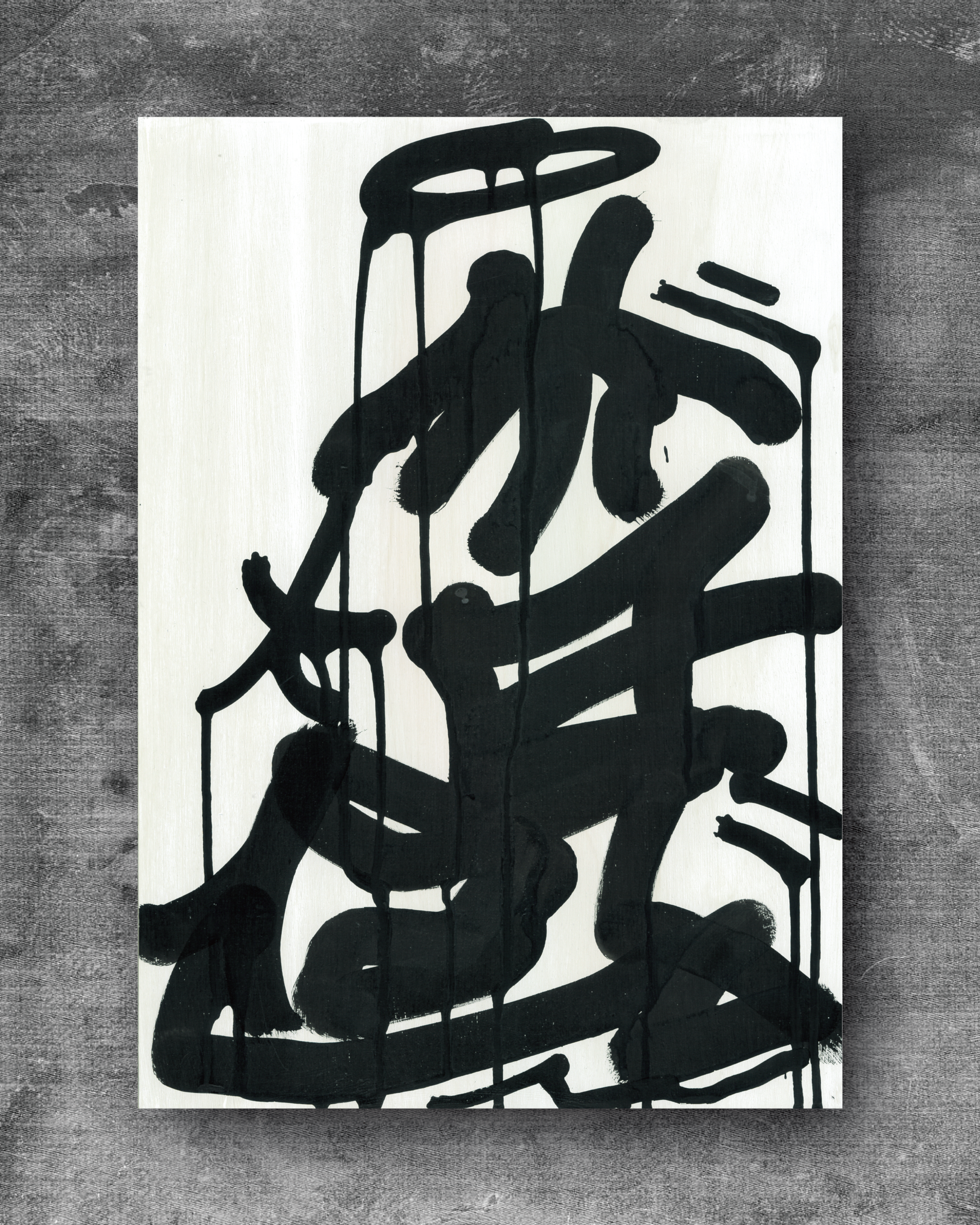

貧
297mm × 420mm
木製キャンバスにジェッソ、クロスプレーにペン
本作は前衛書道家である井上有一の一字書《貧》から影響を受け、同一の文字をグラフィティの視覚言語として再解釈した作品である。
筆跡の先端が矢印状に変形し、線の周囲に装飾的な要素が付加されるレタリングは、都市の壁に描かれるグラフィティの造形から引用されている。 井上有一は一字書を制作する際、体裁の整った文字を選ぶのではなく、自身の感情が一字に突破口を見出し、噴出したものだと語っている。この態度は、生活の貧しさや苦悩といった個人的な痛みを言葉に変換し、他者と共有するヒップホップ文化の姿勢とも通じる。本作は書とヒップホップ、東洋と西洋を横断しながら、表現主義、抽象表現主義、前衛書道、その先の現代的表現主義としてグラフィティを美術史の連続体の中に再配置する試みである。 抽象表現主義がキャンバスを床に置き、重力を無視したドリッピングを行ったのに対し、私は支持体を壁に立てかけ、重力に従う液垂れを導入した。そこで書は都市の壁と同じ構造を持ち、「貧」の文字から戦後日本文化の精神的虚無感を放出している。
This work is inspired by Hin (Poverty), the one-character calligraphic piece by the avant-garde calligrapher Inoue Yūichi, and reinterprets the same character through the visual language of graffiti. The arrow-like deformation of the stroke endings and the addition of ornamental elements surrounding the lines are drawn from the formal vocabulary of graffiti lettering found on urban walls. In producing his one-character works, Inoue did not select neatly composed or aesthetically balanced forms; rather, he described them as eruptions in which his emotions discovered a breakthrough within a single character and burst forth. This attitude resonates with hip-hop culture, which transforms personal pain—such as poverty and hardship—into language and shares it with others. Traversing calligraphy and hip-hop, East and West, this work seeks to reposition graffiti within the continuum of art history as an extension of Expressionism, Abstract Expressionism, and avant-garde calligraphy—pointing toward a further, contemporary form of expressionism. Whereas Abstract Expressionism placed the canvas on the floor and practiced gravity-defying drips, I lean the support against the wall and introduce paint runs that obey gravity. In doing so, calligraphy assumes the structural condition of the urban wall itself, releasing from the character “poverty” a sense of the spiritual emptiness that has marked postwar Japanese culture.